


You're not done hiking. Neither are your knees.
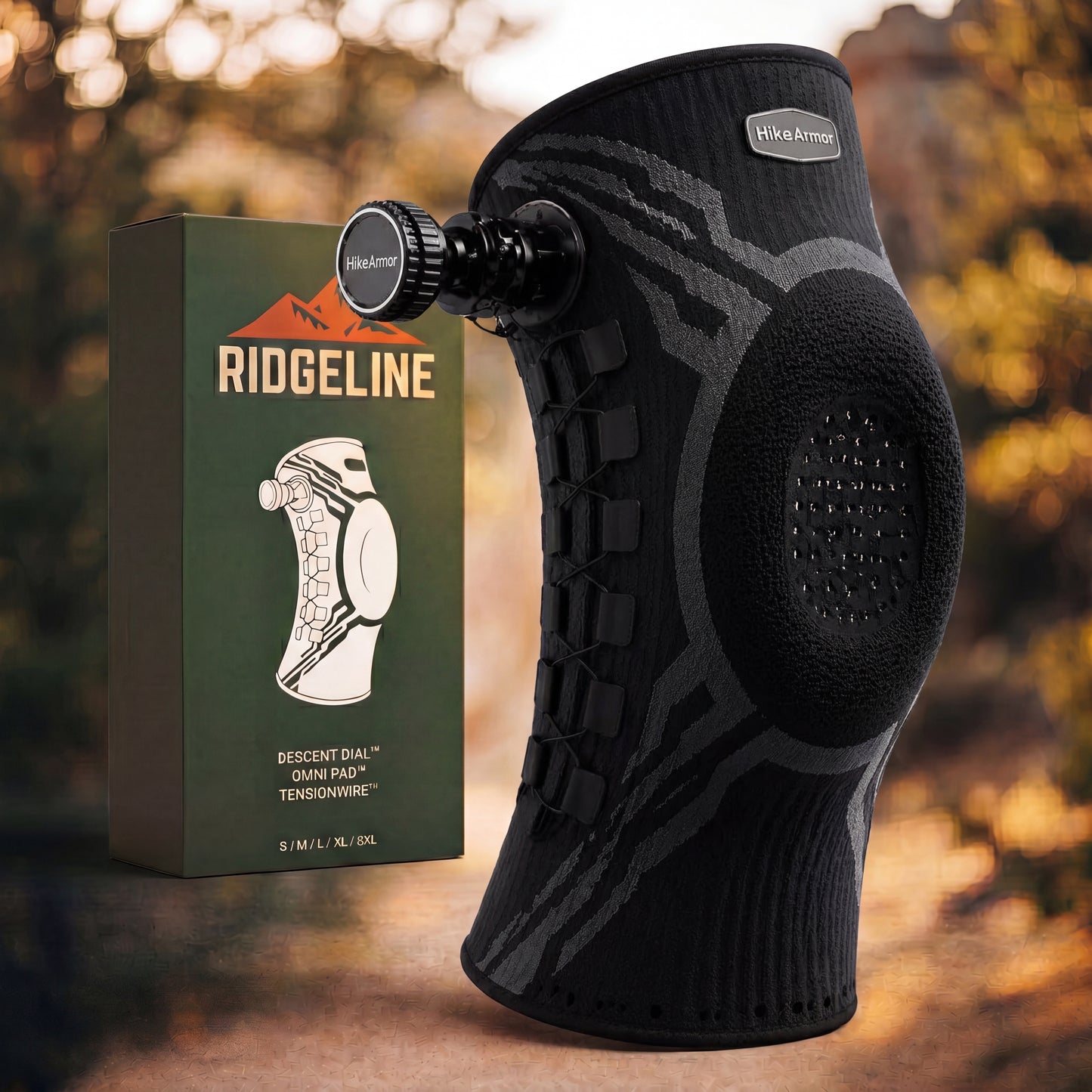
The descents pound the front of your knee and the rough ground keeps it guessing — by the last mile, you feel all of it. RIDGELINE is the brace you dial tighter when the trail drops away or turns technical, and ease off when it eases up. Structured stability that tracks the terrain — not a sleeve that only squeezes.
- Dial up support when the trail drops away or turns technical — without breaking stride
- The Omni Pad spreads downhill pressure across the kneecap, instead of stacking it on one spot
- TensionWire™ cables steady the knee side-to-side on rough or uneven ground
- On in seconds, packs flat, either knee. Structural support — not a medical device.
Couldn't load pickup availability
Sizing & fit guide — find your size
- When measuring, the knee should be relaxed and slightly bent
- For A, measure the circumference of the thigh at 5 ½ inches (14 cm) from the center of the knee
- For B, measure the circumference of the lower leg, just below the kneecap

| Size | A | B |
|---|---|---|
| S | 15 ½–18 in | 11 ½–12 ½ in |
| M | 16 ½–20 in | 12 ½–13 ¾ in |
| L | 18 ½–22 in | 13 ¾–15 in |
| XL | 20–23 ½ in | 15–16 ¼ in |
| XXL | 21 ½–25 ¼ in | 16 ¼–17 ½ in |
Between sizes? Size down for a snugger hold.
RIDGELINE Hiking Brace
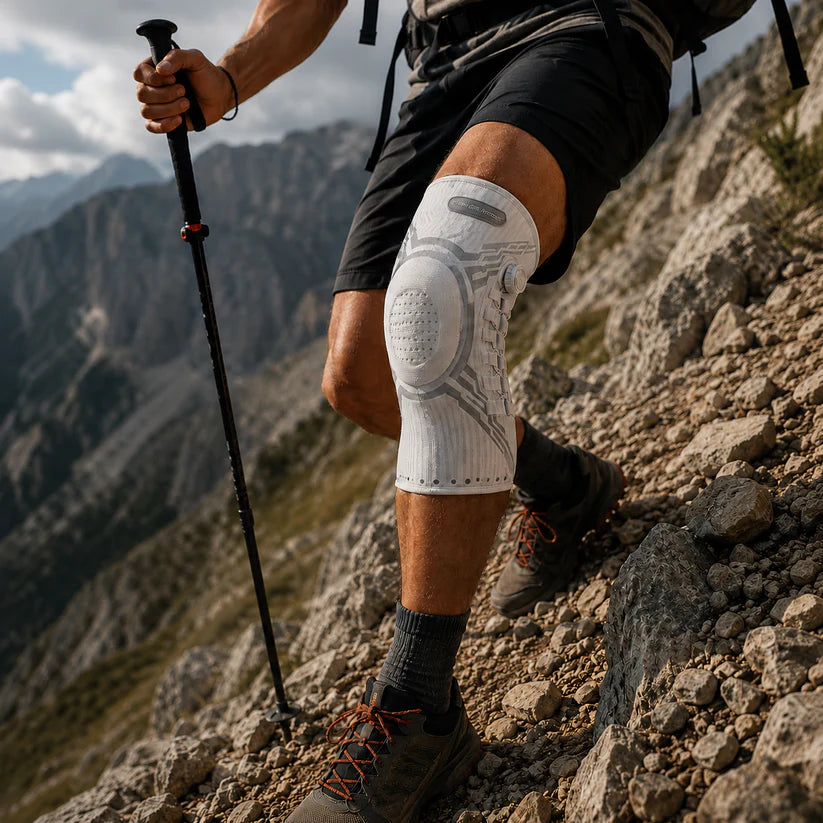

It's the descents — and every uneven step in between.
If your knees are done by the bottom of every descent… if each step on uneven ground feels like it could roll… if you've started skipping the harder trails just to spare your knees the next day — you don't need to stop hiking. You need structured stability under every step. That's the part most hikers have been missing.
A plain sleeve only squeezes. Strength work takes months.
Both miss what actually happens out there: the knee doesn't need more squeeze or another gym block — it needs immediate, adjustable structure the moment the trail drops away or the ground turns unpredictable. That's the gap RIDGELINE was built to close.
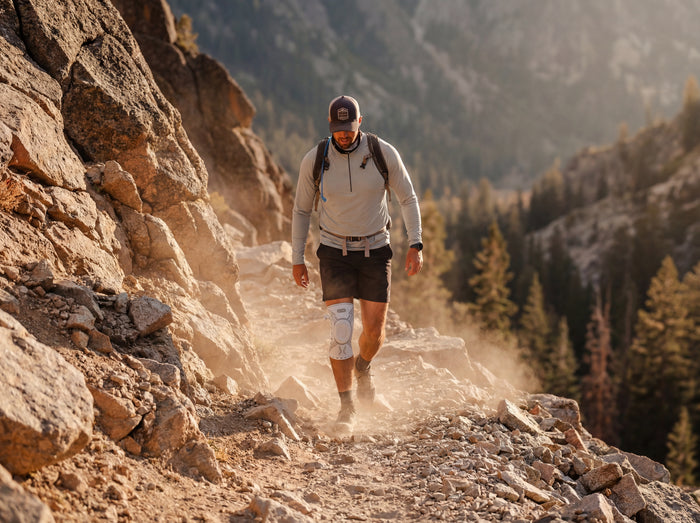
Three systems working together — only when the trail asks for it.
Every part of RIDGELINE earns its place by redistributing load and adding stability during the demanding stuff, then getting out of your way for everything else.
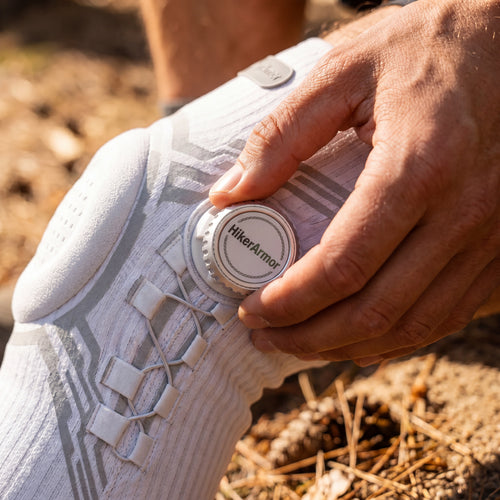
Tighten for the down, ease for the up
A single turn-dial lets you add targeted support the moment the trail tips downhill — then loosen it on the ascent without stopping to re-strap. Your support level follows the terrain.
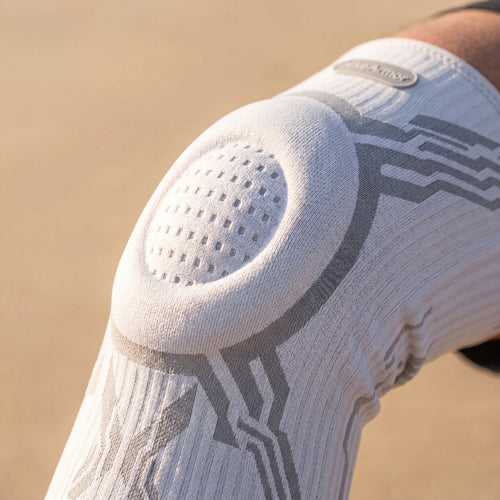
Seats and tracks the kneecap
A cushioned pad sits over the kneecap and spreads the downhill load across a wider surface — taking concentrated pressure off the front of the joint with every step.
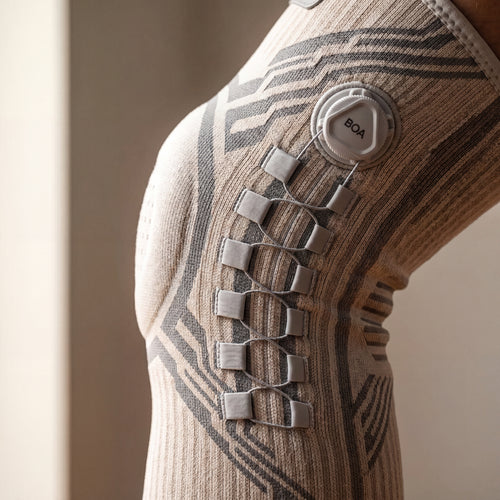
Side stability that tightens with the dial
Cables run along both sides of the knee and tension with every click of the Descent Dial — adding lateral stability when the terrain gets unpredictable, then easing back when it doesn't.
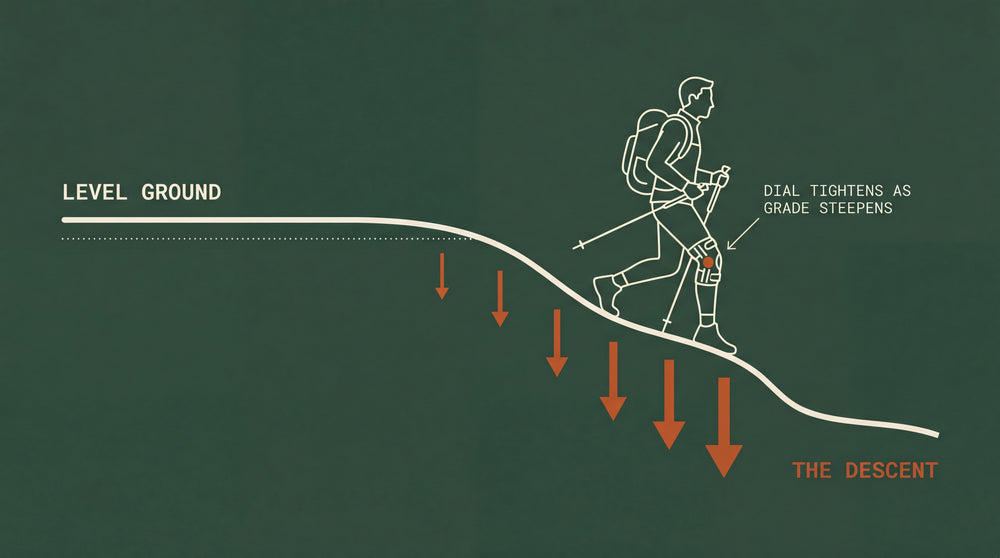
As the grade steepens, the downhill forces on the front of the knee climb with it. RIDGELINE's Descent Dial lets you meet that with more support exactly where and when it's needed — then back it off when the trail levels out.
Every part earns its place on the descent.
No bulk for the sake of it. Four pieces, each doing one job — redistribute the load, steady the joint, and stay out of your way the rest of the time.
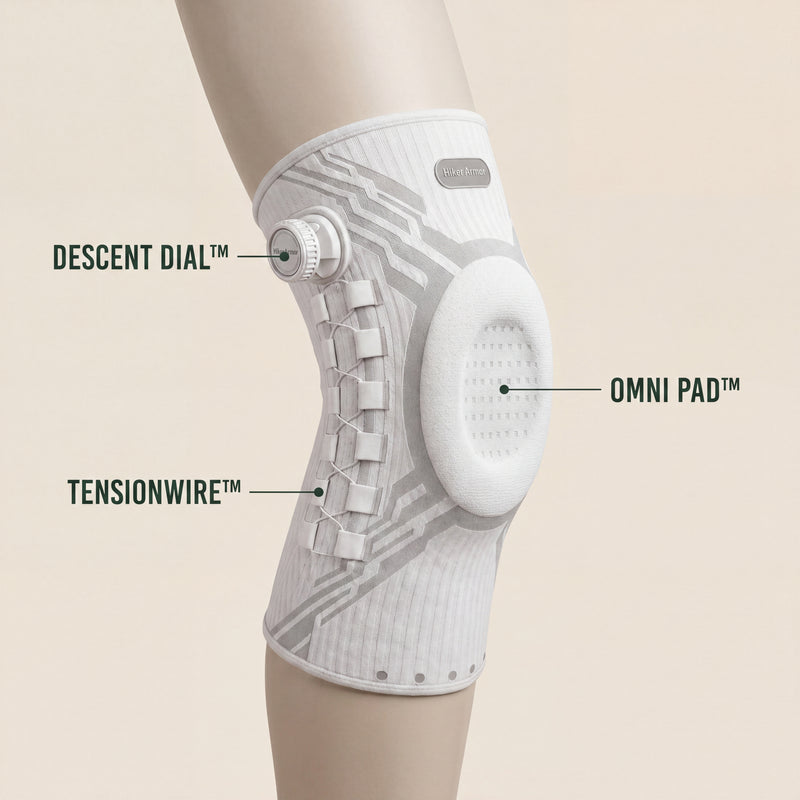
A single turn-dial adds targeted support the moment the trail tips downhill — then loosens on the climb without stopping to re-strap.
A cushioned pad over the kneecap spreads downhill load across a wider surface, taking concentrated pressure off the front of the joint.
Cables along both sides of the knee tension as the dial turns — adding lateral hold when the ground turns unpredictable.
Breathable stretch knit, ambidextrous fit, donning tabs, packs flat. Slips on in seconds and shrugs off the miles.
The difference you feel on the way down.
| On a steep descent… | RIDGELINE | Basic sleeve | Nothing |
|---|---|---|---|
| Adjustable support mid-trail | Dial up / down | Fixed squeeze | — |
| Kneecap tracking & pressure relief | Omni Pad | Light only | — |
| Side stability on uneven ground | TensionWire™ | None | None |
| Stays put without re-strapping | Yes | Slips | — |
| Packs flat, weighs almost nothing | Yes | Yes | — |
RIDGELINE is structural support gear for activity — it is not a medical device or a treatment.
Hikers who quit babying the descents.
Directional examples drawn from real reviews — swap for your own verified reviews before launch.
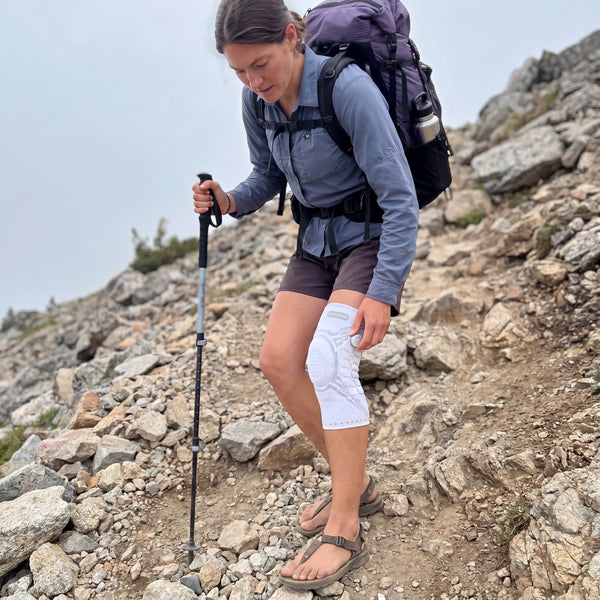
“Honestly figured it was just another sleeve. First long descent with it and I came down faster than buddies ten years younger than me. It lives in my pack now.”
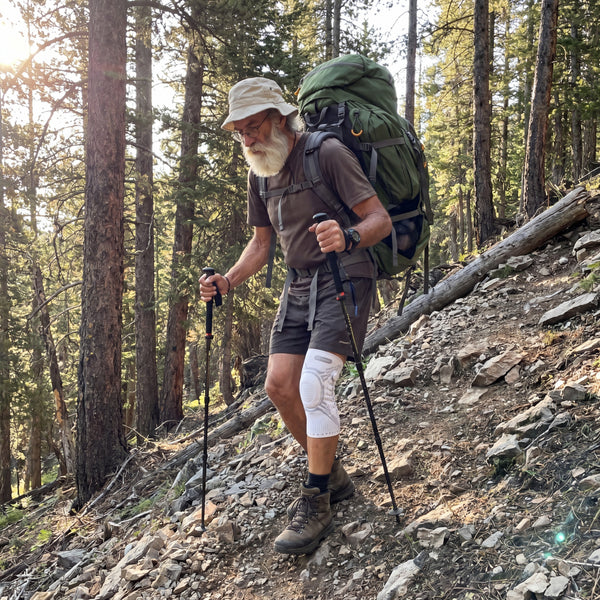
“At 64 I'd basically written off the big descents. Did a 12-mile loop last month and finished steady the whole way down. Being able to tighten the dial right when it got steep is the bit that sold me.”
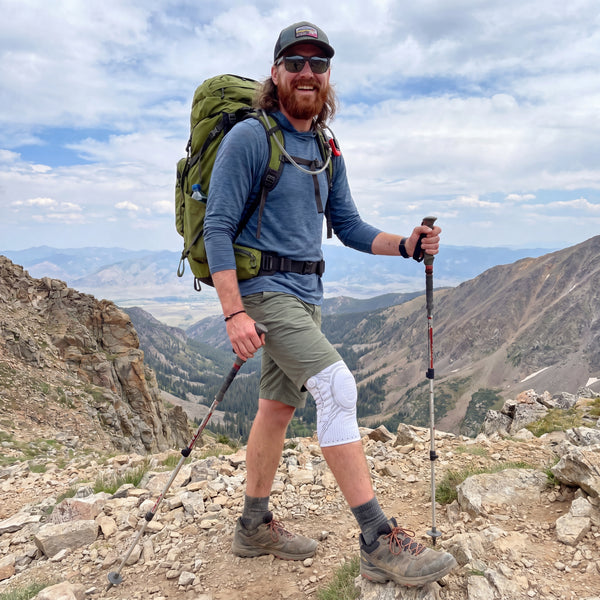
“Pack an elk out of a steep drainage and you find out fast what your gear's worth. Felt solid the whole way out. My buddy asked what I was wearing — bought him one for Christmas.”
Made for some hikers — not for everyone.
RIDGELINE is for you if…
- You're 35+ and the descents take more out of you than they used to
- You've started picking flatter trails just to dodge the climb down
- You've hiked your whole life and you're nowhere near done
- You want support you can adjust on the trail, not a fixed sleeve
It's probably not for you if…
- You're looking for a medical device or a treatment — this is activity support, not that
- You only ever walk flat, paved ground (you probably don't need it)
- You're not interested in protecting the trail years you've got left
Questions, answered straight.
Will it help with knee discomfort on the way down?
It's designed to add stability and redistribute pressure during demanding movements like downhill hiking, and many hikers notice a real difference in comfort and control on the descent. It's not a medical device or a treatment — it's support gear for activity.
How is this different from a normal compression sleeve?
A basic sleeve mainly squeezes. RIDGELINE adds structural support: an adjustable Descent Dial™, TensionWire™ cables that add lateral stability on both sides of the knee as the dial tightens, and an Omni Pad™ that cushions the kneecap on downhill steps — so you can change your support level as the trail changes.
Can I wear it on either knee?
Yes — it's built ambidextrous, so one brace works on your left or right knee. If you want support on both, the pair is the way most hikers go.
Will it restrict my movement?
No. RIDGELINE is built to move with you — the TensionWire™ cables add lateral stability as the dial tightens, but follow your natural stride rather than fighting it. You keep your full range of motion.
Can I wear it all day on a long hike?
Yes — it's lightweight with a breathable, secure fit, made for extended wear without constant readjusting. Dial it up for the descents, ease it off the rest of the time.
Should I still strengthen my knees?
Absolutely. Strength and mobility work matter for the long run. RIDGELINE is there to support you during the activity — not to replace good training.
The climb up is optional. Coming down isn't.
Give the descent the support it actually asks for — and take back the trails you'd started leaving off the list.